
While most of the trekker’s overcome days long climb on a rugged trail, others simply choose to fly in and out of Everest Base Camp. That being said, every trekker takes at least a flight to the closest airport to Mount Everest as it’s a gateway to the Everest region.
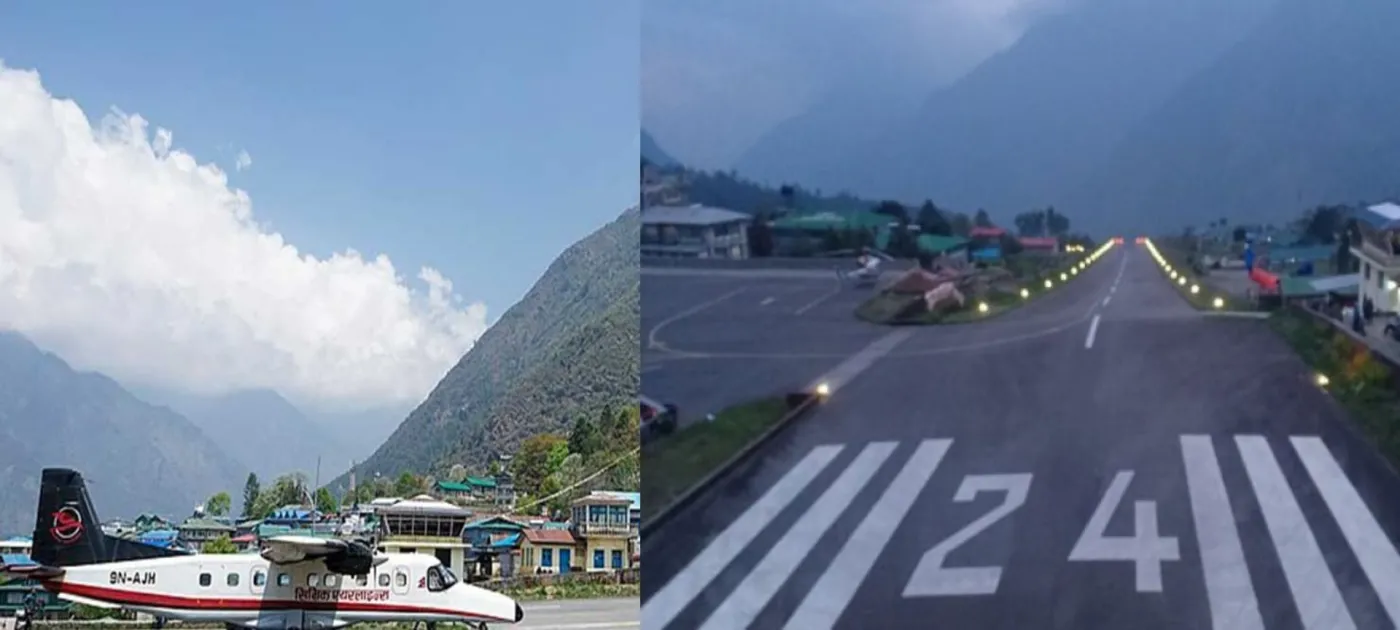
This costs them just a few bucks and a total travel time of 45 minutes from Kathmandu. Tenzing-Hillary Airport also popular as Lukla Airport is the nearest airstrip to both Everest Base Camp and Mount Everest.
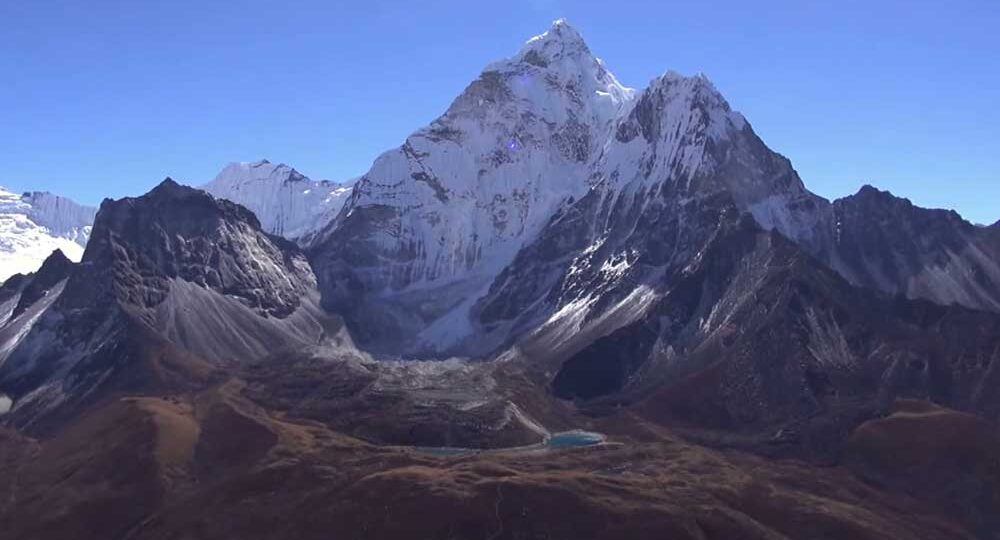
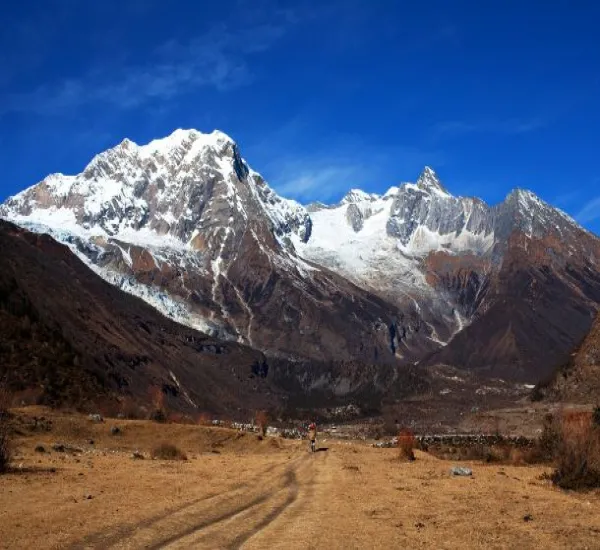
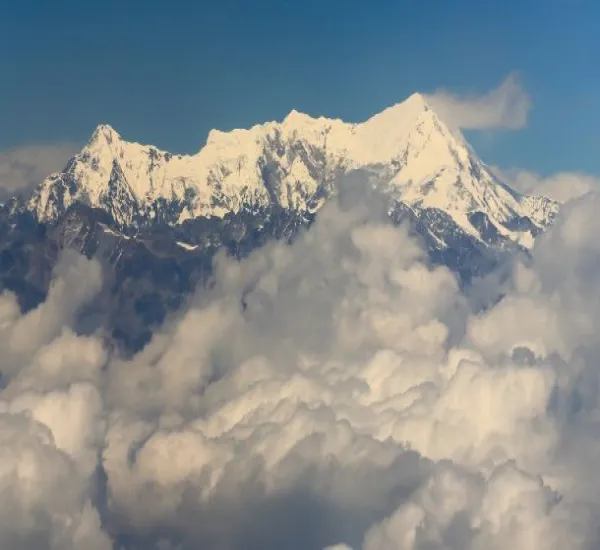
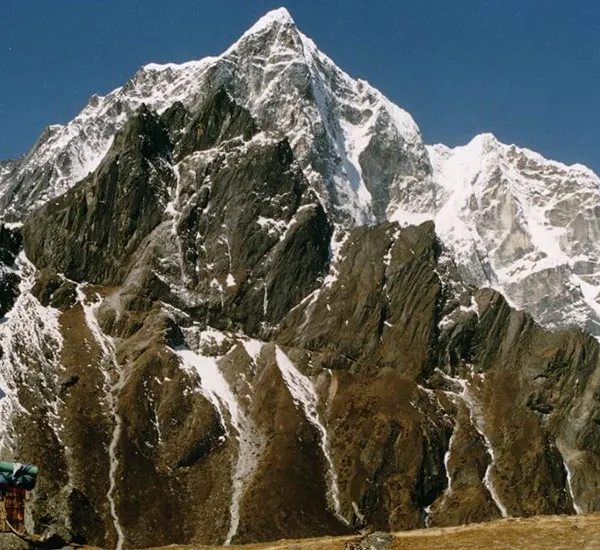
It’s certainly not the best airfield in the country with no airside shops and cafe stores. And yet, Lukla airport is one of its kind with a picturesque view of the Himalayan ranges, sweeping landscapes, and verdure.
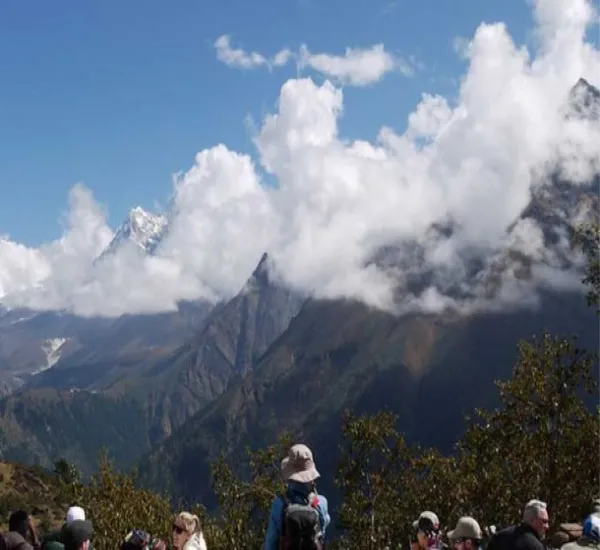
Travelers onboard are usually surprised by wild animals playing around Sagarmatha National Park. A sneak-peek outside the window will help them catch the breathtaking scenery of cascading waterfalls, luscious meadows, and beautifully designed Tibetan monasteries.
Tenzing Hillary Airport is one of the busiest domestic airports in Nepal with travelers flowing down from all over the world. It’s the prime access to the Khumbu region and inlet to Everest. Hence each trekker flies the closest airport to Mount Everest or takes a drive up to Jiri and scrambles uphill for about five days to reach Lukla.
Who built Lukla airport?
Opened more than 5 decades ago, Tenzing-Hillary airport is the only airstrip in Lukla.It was made in 1964 by Sir Edmund Hillary, a mountaineer, and philanthropist from New Zealand. He was the one who acknowledged the urgent need for an airfield in the region and decided to construct it on his own.
The Kiwi initially approached local farmers to trade their plain field so that he could build the airport. Unfortunately, it didn’t go well with the Sherpa so he had to dump the plan and get the runway made in a new location. Back then, it cost him US$2,650 to purchase that big acre of land.
Edmund subsequently lured Sherpa with a liquor to do foot-stomping on the land and make it evenly flat. Professional aviators used the unpaved runway for as many as 37 years before an asphalt concrete was finally laid on the surface.
As of now, the airstrip serves twin-turboprop and single-engined utility aircraft including fixed-wing, Dornier do 228, and The narrow runway of Pilatus PC-6 Turbo Porter. Most of the aircraft that lands on Tenzing Hillary airstrip is a short-take-off-and-landing flight due to its small runway.
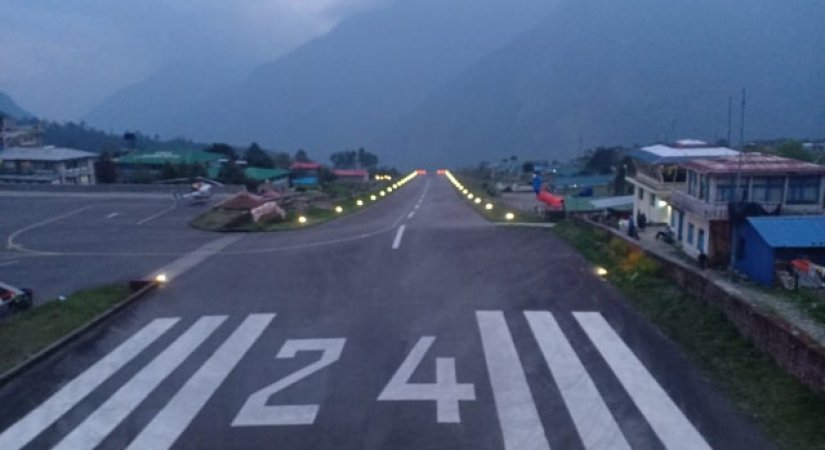
The airstrip is only 1,500 ft, long and 65 ft, wide with a gradient of 12% north to south. At one end of the airstrip, there’s an adjoined cliff with a 2000 foot drop while the other end has a rock-solid stone wall.
Given the dramatic ascent and steep path, pilots landing at Lukla airport needs special training. They have to make a sharp turn at places with no strong visibility and also make a quick landing when the weather’s bad.
Tenzing Hillary airport lacks night operations and navigation aids, following which pilots have to use their skills while flying over terrains and mountains. Take-offs and landings need precision on the tyne runway of Lukla airport.