Best Season for Short Mera Peak Climbing
Unlike any other high-altitude adventure in the country, the best season for this Short Mera Peak Climbing is considered to be during the peak climbing seasons, autumn (September to November) and spring (March to May). These peak seasons are known for providing an exhilarating and gratifying experience as you set out on an exploration in stable weather and clear days. There is also very little probability of snowfall or rain during these peak seasons, making them the most ideal time for outdoor adventure.
Spring is one of the most preferred by trekkers and climbers who want to explore the natural allurements of the region when it is at its peak. The green vegetation, colorful wildflowers, lush forest of rhododendrons, pines, oak, and fir including the opportunity to witness the Himalayan wildlife enjoying nectar of the nature make this trekking trail a paradise for nature lovers. As the temperature is on the warmer side, it usually hovers around 15°C- 20°C during the daytime, whereas the night temperature usually averages around 12°C to -8°C.
As for the autumn season, it is mostly known for the mild temperatures, fresh nourished landscapes and water resources by the monsoon rain, and just the amazing views of the Himalayan vistas on a clear beautiful day. The day temperature of the valley is around 14°C to 20°C during the daytime and can drop upto 10°C to -5°C at the nighttime and early mornings. As this season is closer to the winter, you might also occasionally see light snowfall, especially during the late-November. The temperature over the altitude of 4,000 meters is usually in minus degrees during the night time.
Is Mera Peak Tehnical?
On the surface value, the Mera Peak climbing has been labeled as a non-technical expedition, however, it doesn’t mean that there will not be any technical segments on the mountain. Although Short Mera Peak Climbing is pretty much a straight walk-up adventure and has a very gradual and moderate route, there are a few technical parts that you will have to overcome during this mountain expedition.
Mera Peak Climbing has been graded a Grade PD in the Alpine Grading System which indicates that there are some technical and challenging segments on the mountain that the climbers have to overcome. In the past, this mountain expedition was graded an Alpine Grade F, however, due to the change in the glacial form and the technical segment near the summit, the difficulty level of this expedition was upgraded. Climbers have to use jumar on the fixed rope during the last leg of the summit push to overcome the snowy dome, 40- 50 meters ahead of the summit.
However, it doesn’t mean that the climbers should have previous climbing experience or technical knowledge to do this expedition, if you have mountaineering skills it will be helpful though. As this peak is recommended for completely new mountaineers who want to gain some scaling experience, you will be able to easily complete this expedition without any experience or skills too, just make sure to train acutely for the climb. Short Mera Peak Climbing is a fully guided expedition, our expert expedition team and leader will make your safety and experience a priority so you can fully relish the experience without worrying about anything. You will also receive a pre-climbing training session at Khare and possibly at the High Camp in order to boost your confidence level and morale.
Preparation for the Short Mera Peak Climb
Climbing Mera Peak is an exciting challenge with a mix of high altitude trekking and demanding ascent to 6,476 meters. The alpine location and rugged mountainous terrains present various physical, mental and environmental challenges. Hence proper preparation is a must for a safe and successful climb. This involves physical fitness, knowledge about the conditions at high altitudes, and the right gear, skills, and mentality.
Physical Fitness
The level of physical fitness needed to climb Mera Peak is moderate to high. While there is no need for technical climbing experience throughout most of the trek you will still be exposed to challenging physical activities such as walking at high altitudes, steep climbs and long days of trekking. All-body fitness is recommended with a good level of cardiovascular endurance.
The goal is to increase your stamina and train your body to handle the prolonged physical exertion of trekking in the Himalayas. So begin by improving your cardiovascular fitness through regular aerobic exercises such as running, cycling, jogging, dancing or swimming.
Alternately, you can add stair climbing or hiking with a loaded backpack to stimulate the ascent and strengthen the legs.
To enhance your strength and stamina, consider being involved in exercises like squats, lunges, step-ups, planks, push-ups, pull-ups, deadlifts, etc. Additionally, if possible, practice hiking at high altitudes/acclimatization hikes. Staying over 2,000 meters can help your body acclimate to lower oxygen levels. Try breathing exercises to increase lung capacity and oxygen intake if altitude training otherwise.
Mental Resilience
Mera Peak’s location is remote and isolated amidst the wilderness and the trek is for multiple days with a tough summit push. A climber should be mentally resilient, focused and determined while feeling tired, uncomfortable and probably under bad weather conditions. The preparation of the mind for seclusion and long days of trekking is important for successfully completing the adventure.
The key strategies include maintaining positivity, focusing on smaller goals and going at a steady pace. Courage and determination are indispensable for overcoming challenges and achieving success especially while facing adversities. Meditation and deep breathing exercises on the trail may help manage stress and anxiety levels and build mental fortitude.
Appropriate Packing Lists
Clothing
- Warm hat or beanie
- Balaclava or neck gaiter
- Liner gloves
- Insulated gloves or mittens
- Thermal tops and bottoms
- Moisture-wicking T-shirts (both half and full sleeve)
- Fleece trousers
- Trekking shirts and pants
- Thermal underwear (3-4 pairs)
- Socks 3-4 pairs (both liner and woolen)
- Fleece jacket or pullover
- Sweater
- Down vest
- Down jacket
- Insulated parka
- Waterproof and windproof jacket and pants
Footwear
- Light sports shoes (for short ady and easy hikes)
- Sandals and woolen slippers (for teahouse stays)
- Flip flops
- Trekking boots (worn in and sturdy)
- Mountaineering boots
- Crampons or microspikes
- Gaiters
Climbing Gear
- Climbing helmet
- Harness
- Ropes
- Ice axe
- Glacier Glasses
- Carabiners
- Ascender and descender
Trekking Gear
- Trekking poles
- Sleeping bag rated for below 0 degrees
- Sleeping pad
- Sleeping bag liner
- Backpack
- A small daypack
- Sunglasses with UV protection
- Headlamp with a spare set of batteries
Personal items
- Water bottles
- Toothbrush and toothpaste
- Wet wipes
- Hand sanitizer
- Biodegradable soap
- Toilet Paper
- Sunblock SPF 50 or higher
- Lip balm with SPF
Miscellaneous
- Energy bars
- Trail mix
- Electrolyte tablets (to maintain hydration at higher altitudes)
- Camera and extra batteries
- Water purification tablets or filter
- Notebook or journal
First Aid and Health Supplies
- Bandages
- Gauze pads
- Antiseptic wipes
- Blister plasters
- Pain relievers
- Diamox (Acetazolamide)
- Personal medications
- Anti diarrheal
- Anti-nausea tablets
- Sprian spray
- Adhesive Tape
- Thermometer
- Cotton balls or swabs
- Anti-inflammatory cream
- Cough syrups
- Eyewash
Documentation
- Passport
- Nepal Visa
- Travel Insurance
- Emergency contact list
- International flight tickets
- Trekking and climbing permits
- A few passport size photographs (for different official purposes)
- Both paper and digital copies of your documents
- Cash converted to local currency
Buying/Renting Gear
If you have not brought or purchased the gear and clothing for climbing Mera peak, you can buy or rent in Kathmandu. Thamel is famous for its range of shops selling and renting trekking and mountaineering gear and clothes.
From jackets and boots to sleeping bags and backpacks, you will be able to get everything required for your Himalayan journey. However, choosing one of the reputable brands is important to make sure that it will be durable as well as comfortable to wear.
The prices of mountaineering equipment vary greatly, from USD 10 to USD 500 or even more, depending on the material, brand, quality and durability. A lot of people rent gear out and the prices usually range from USD 2 to USD 10 per day.
Storing Excess Luggage
Extra luggage not needed during the short Mera Peak Climbing can be kept at different places. Hotel storage and trekking agencies are some of the most popular and reliable choices.
Most hotels in Nepal offer luggage storage to their guests. Some provide it for free, while others charge a small fee. Generally, hotel storage is secure but always lock your bags for peace of mind. You can keep your extra belongings in the hotel where you will stay in Kathmandu.
Most of the trekking agencies, including ours, will also provide free luggage storage for their clients. We will store your luggage safely until you return from your journey.
Short Mera Peak Climbing Cost and Booking
The short Mera peak climbing price (12 days) varies depending on the chosen trekking agency, the quality of service and the inclusions. On average, a Mera Peak climbing package cost is somewhere between USD 2,500 to USD 3,500 per person. Everything will be included at this price, from transportation and permits to guides, meals and accommodations.
Although it is not cheap to climb Mera Peak, it is affordable compared to other major Himalayan expeditions. For many trekkers, the short Mera Peak Climbing itinerary offers a good balance of cost and adventure.
Bookings for Mera Peak can be made through trusted trekking agencies in Nepal. Research those who are authorized with good reviews and provide experienced guides. Then contact them directly or through the websites and ask about available Mera Peak packages.
Confirm the dates and pay a deposit to confirm your booking. The required deposit normally ranges between USD 200 and USD 500. Then, send the required documents, such as a copy of your passport, insurance details and others. Full payment of the due amount for the package can be paid anytime closer to your departure date or in Kathmandu in person.
Is Mera Peak Safe for Beginners?
Climbing Mera Peak is a non technical ascent of over 6,000 meters with no expert skills in ice climbing, rock climbing or crevasse rescue techniques. Still, climbers should have basic mountaineering knowledge like high altitude trekking, glacial terrain travel, and the use of fundamental climbing equipment. How safe Mera Peak will be for a beginner depends on multiple factors like the fitness, preparation and support offered throughout the expedition.
For beginners, it is necessary to acclimatize properly so that their body gets used to the minimal oxygen level while going upward. Likewise, hiring a guide and porter is necessary who helps you with navigation and carrying loads.
As a beginner, it is also essential to be prepared for the cold and to have the right clothing and equipment for extreme high altitude conditions. Similarly, maintaining focus and determination during difficult moments, especially on summit day, is crucial. The final ascent to the summit of Mera Peak is a straightforward snow climb with some long and steep sections. Using ropes, ice axes and crampons, beginners can safely make it to the top.
Overall, Mera Peak is considered a safe and achievable climb for beginners. The most important thing is to book a package through a reputable trekking agency that will provide professional guides and safety measures to ensure your climb remains safe and enjoyable.
Altitude Sickness During Mera Peak Climb
Altitude sickness is a common challenge faced during altitude gains. Being 6,476 meters, Mera Peak is no exception, posing a high risk of altitude sickness.
Altitude sickness usually occurs after going up above 2,500 meters. It presents symptoms like headaches, nausea, dizziness, breathlessness, fatigue, loss of appetite and sleeplessness. Its threat increases the more you go to the higher elevations.
Acclimatization is vital which allows your body time to adjust to the thinning air and reduced oxygen levels at higher altitudes. It is also very important to stay hydrated at altitude by drinking plenty of water and fluids. Similarly important is eating high energy foods to maintain energy levels and not get fatigued. If you start feeling short of breath or overly tired at any point, slow down, rest and hydrate.
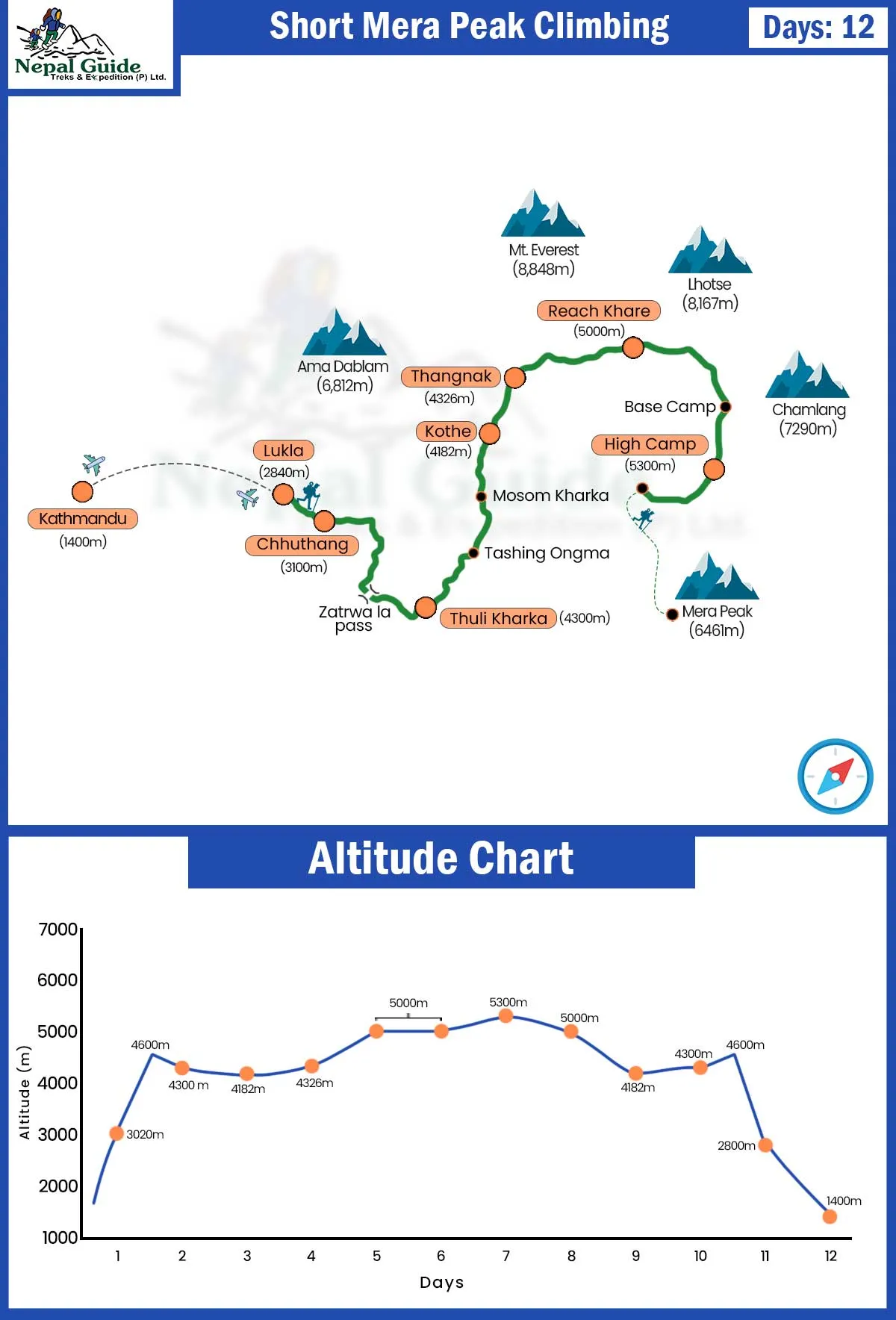
In our 12 days Mera Peak Climbing itinerary, a rest day is included at the strategic point of Khare, a village at a higher altitude. This rest day allows climbers to stay at a particular altitude and allows them to adapt to the oxygen-deprived environment.
Guide and Porter for Climbing Mera Peak
While trekking to Mera Peak, guides and porters can enhance the experience of the expedition with safety, local knowledge and comfort. The guide will help you find a route, assess the weather and ensure you are suitably equipped and the porter will carry your heavier gear and keep you comfortable.
Make sure that the guide is a government license holder and works as a member of a registered trekking agency. Likewise, it is advisable to hire a strong local porter who is familiar with the local trails and terrains.
A certified and experienced guide is a lifesaver, especially for those new to high-altitude mountaineering or unfamiliar with the region. Guides will do more than just help take the group through the trail. They are well-skilled professionals who know more about the terrain, climatic conditions and safety rules in the high Himalayas.
Guides ensure that everyone follows the right and safe route to the summit. Besides, they know the local culture and can provide a lot of valuable information on the customs and traditions of the natives, which enhances the trekking experience.
On the other hand, porters are important in freeing you from the load of trekking and climbing gear and other personal belongings. This way, they let you travel light and deeply immerse in what the adventure has to offer.
Cultural Experiences During the Mera Peak Journey
Mera Peak climb is a culturally enriching experience that soaks you into the rich traditions, customs and unique lifestyles of people in the Khumbu region. The route to Mera Peak passes through charming Sherpa villages dotted with ancient heritages, which provide an opportunity to explore the cultural richness of this region.
Trekking through the traditional Sherpa settlements, you will get a feel for the untampered way of life tied closely to the land, religion and mountain culture. Moreover, the historical Buddhist stupas and shrines, the flapping of colorful prayer flags and the chants of monks provide a timeless feeling and tranquility. Besides, the heartfelt hospitality of friendly, welcoming and generous Sherpa people make your journey to Mera Peak unforgettable.
If your trekking period coincides with festivities, you can get a chance to witness the cultural celebrations and religious rituals as well as be a part of the vibrant celebration with villagers. The residents are so warm that they welcome you to their festivities with open arms. Furthermore the insights into the livelihood of locals from traditional farming methods and the challenges of living at high altitudes to the role of animals are truly enriching.
Food During Mera Peak
During the Mera Peak expedition you will find a variety of food options to keep you nourished and energized. Along the way, the teahouses provide you with Sherpa-western fusion meals, including traditional Sherpa dishes and popular international dishes.
The teahouse menu typically includes the following meal items:
Breakfast
- Eggs
- Pancakes
- Porridge
- Muesli
- Tsampa
- Porridge
- Toast (with jam, butter or honey)
- French fries
Lunch and Dinner
- Dal Bhat (rice, lentils and pickles)
- Momo
- Noodles
- Rice and vegetable or chicken curries
- Pasta
- Sandwiches
- Samosa
- Sherpa stew
- Thukpa
- Pizza
- Yak steak
Besides, you can enjoy a range of beverages, such as:
- Tea (black tea, milk tea, lemon tea, herbal tea, butter tea)
- Hot chocolate
- Coffee (black and milk)
- Soft drinks like Coca-Cola, Sprite, Fanta
- Fresh fruit juices
While food options in the teahouses are generally basic, they are fresh and prepared to provide the necessary nutrition for high-altitude journeys. As you go higher, the teahouse meal choices may be limited due to the remoteness. However, you will always find something to fill your tummy.
During the climbing phase of Mera Peak, we will provide you with a mix of freshly cooked meals and well-packed snacks to fuel you up for the demanding ascent.
Permits Required for Mera Peak Climbing Adventure
- Makalu Barun National Park Entry Permit – USD 22/NPR 3,000
- Khumbu Pasang Lhamu Rural Municipality Permit – USD 22/NPR 3,000
- The Mera Peak climbing Permit
- USD 250 in autumn (September, October and November)
- USD 125 in spring (March, April and May)
- USD 70 in summer/monsoon (June, July and August) and winter (December, January and February)
Since Mera Peak is located in the Makalu Barun National Park, a Makalu Barun National Park Entry Permit is required. This is necessary for anyone trekking through the park, taking in the majestic Himalayan views and varied wildlife. Likewise, the Mera Peak climbing permit is essential for all climbers attempting its summit. It ensures the climb is conducted under official guidelines and has safety standards in place. On the other hand, a Khumbu Pasang Lhamu Rural Municipality Permit is needed to access the controlled area for trekking.
Obtaining the permits necessary for Mera Peak climbing is simple. It needs coordination with trekking/mountaineering authorities and some paperwork. Ensure you get all the necessary permits in advance through a registered agency that will fulfill all the documentation required to get your permits on your behalf.
Mountain Views During Mera Peak Climbing Journey
The Mera Peak journey offers awe-inspiring views of the different Himalayan giants. The most iconic photography spot on the entire trip is the summit itself. Once you reach the top you are rewarded with a panoramic view of the majestic peaks surrounding you from all sides.
From the top of Mera Peak, you can enjoy the stunning panoramic views of some of the highest mountains in the world, including Mount Everest, Lhotse, Cho Oyu and Makalu. Besides, the views of Kanchenjunga, Nuptse, Baruntse, Pumori, Ama Dablam, Island Peak, Kusum Kanguru and many other adjoining mountains are surreal. The grandeur and beauty of the Himalayas make the summit experience extraordinary.
You may also like:
Why Choose the 12 Days Mera Peak Climb and Why Us for This Adventure?
The 12 days Mera Peak Climb is an adventurous and achievable opportunity to summit Nepal’s highest Himalayan trekking peak (6,476 meters). The 12 days Mera Peak package is greatly accessible with a good taste of a Himalayan mountaineering experience. This compact adventure best suits those who prefer the taste of a high-altitude Himalayan peak but with a shorter expedition time.
With only 12 days required, it is the perfect option for those on a tight schedule, whether a short vacation or a quick getaway from work. On the other hand, this short Mera Peak itinerary includes a rest day at Khare which balances the ascent with acclimatization to ensure a safe and steady climb. So if you are seeking an accessible, well organized and enriching Himalayan adventure, look no further than the 12 days Mera Peak climbing journey.
When it comes to choosing the company for your Mera Peak climb, Peak Climbing Nepal stands out as an ideal partner for your adventure due to the following reasons:
- Expert knowledge and experience
- Licensed and professional guides with several years of experience in the related field
- Tailored and flexible itinerary
- Focus on safety
- Affordable and transparent pricing
- Commitment to sustainable tourism
- Positive reviews and reputation
Trip Extensions
After successfully ascending the summit of Mera Peak there are other ways to continue soaking up the majestic Himalayan landscapes and culture. For those willing to prolong their adventure, Mera Peak can easily be combined with other trekking routes in the Everest region and several stunning locations in Nepal. Depending on your interest, the climb could be combined with visiting Everest Base Camp or exploring other valleys and villages in the Khumbu region.
One of the most interesting Mera Peak extensions for climbers is climbing the other popular trekking peaks of Island and Lobuche. This is also known as the three peak climbs, the expedition of Island, Mera and Lobuche in a single go. Otherwise, you can return to Kathmandu and engage in sightseeing activities. The Kathmandu Valley is filled with magnificent UNESCO World Heritage Sites.
Useful Tips for Mera Peak Climbing in Nepal
- Dress in layers to stay warm and comfortable throughout the expedition, as the high Himalayan region is usually cold and presents unpredictable weather conditions.
- Learn techniques for walking with crampons and the use of an ice axe prior to the climb, as there will be sections of both ice and snow.
- Take it slow by ascending gradually and follow the ‘climb high, sleep low’ approach to aid in acclimatization.
- Stay well hydrated by drinking plenty of water to prevent dehydration and altitude sickness.
- Avoid alcohol and caffeine which will lead to dehydration.
- Be mindful of signs of altitude sickness, such as headache, dizziness, nausea, etc, and descend if necessary.
- Make sure your insurance covers alpine trekking and climbing as well as emergency evacuation.
- The weather in the mountain region can be quite uncertain. Hence, it is very important to stay flexible with your schedule or summit day plans.
- Eating healthy and nutritious meals, taking good rest and sleep will prepare your body for each day’s adventure.
- Hire a guide for safety and effective navigation along the route.